

The wheel has spoken…
Episode 176 of Rock Roulette spins us straight into Southern rock royalty as it lands on The Allman Brothers Band – Idlewild South.
Twin guitars, blues-soaked grooves, and a band hitting its stride between raw power and improvisational magic. This one’s all about feel, flow, and finding where the Allman’s really started to stretch out.
Did the wheel make the right call? Drop the needle and ride with us.
Idlewild South is the second studio album by American rock band the Allman Brothers Band. With the exception of one song, the album was produced by Tom Dowd and was released on September 23, 1970 in the United States, by Atco Records and Capricorn Records. Following the release of their 1969 debut, the Allman Brothers Band toured the United States extensively to promote the album, which had little commercial success. Their performances, however, did create positive word of mouth exposure that extended to more famous musicians, such as Eric Clapton, who invited group leader Duane Allman to contribute to his 1970 album Layla and Other Assorted Love Songs.
As a result of the band’s relentless touring schedule, Idlewild South was recorded gradually over a period of five months in various cities, including New York, Miami, and Macon, Georgia, the band’s adopted home. Tom Dowd had previously been sought to record the group’s debut but had been unavailable. The material presented on Idlewild South was written during this period and tested out on the road at shows. The album’s title comes from the band’s nickname for a rustic cabin the band rented out and used for rehearsals, as well as parties. Idlewild South contains two of the band’s best-known songs, “Midnight Rider” (later a hit for various artists) and “In Memory of Elizabeth Reed”, which became one of the band’s well-known concert numbers.
The album was released in September 1970 but again failed to achieve significant success. Sales began to grow, however, due to over 300 shows the band put on in 1970, setting the stage for their artistic and commercial breakthrough with 1971’s live follow-up album, At Fillmore East. Following the band’s increased fame in the early 1970s, this album and its self-titled debut, The Allman Brothers Band, were repackaged into the compilation album Beginnings. In 1973, Beginnings was certified gold for sales of 500,000 copies, according to the Recording Industry Association of America.
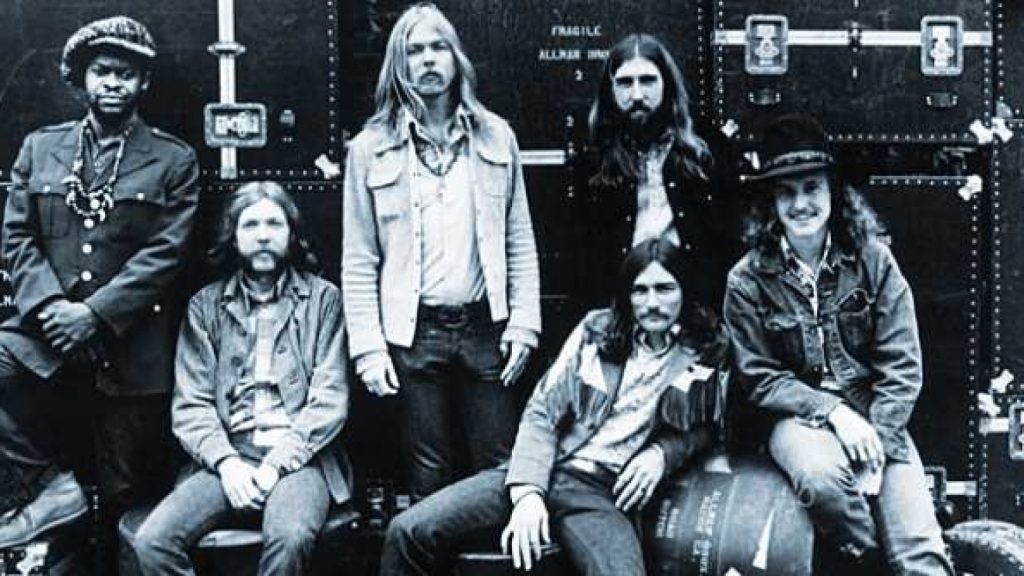
The Allman Brothers Band
Gregg Allman – vocals, organ, piano
Duane Allman – slide guitar, lead guitar, acoustic guitar
Dickey Betts – lead guitar
Berry Oakley – bass guitar, vocals on “Hoochie Coochie Man”, and harmony vocals on “Midnight Rider”
Jai Johanny Johanson – drums, congas, timbales, percussion
Butch Trucks – drums, timpani
Production
Tom Dowd – production, engineer
Joel Dorn – producer on “Please Call Home”
Frank Fenter – supervision
Bob Liftin – engineer
Chuck Kirkpatrick – engineer
Howie Albert – engineer
Jim Hawkins – engineer
Ron Albert – engineer
Jimm Roberts – artwork, photography
Suha Gur – mastering
Additional Musicians
Thom Doucette – harmonica, percussion
Intro Music/Wheel Spin Music by LiteSaturation from Pixabay
Fair Use